Most homeowners know that mowing regularly keeps a lawn looking neat. What far fewer realize is that mowing at the wrong height can do more damage to a lawn than skipping a cut altogether. Cut too short and you stress the grass, expose the soil to weeds, and reduce the root depth that keeps your lawn resilient through heat and drought. Cut too tall and you risk thatch buildup, pest harborage, and uneven growth.
In Cleveland, TN, where lawns can include a mix of warm-season and cool-season grass varieties, knowing the right mowing height for your specific grass type is one of the simplest and most impactful things you can do for long-term lawn health.
Why Mowing Height Matters More Than You Think
Every grass type has what’s called an ideal leaf blade length — the height at which it photosynthesizes most efficiently, develops the deepest root system, and competes most effectively against weeds. When you mow consistently within that range, you’re working with the grass rather than against it.
Mowing too low — a common mistake known as scalping — removes too much of the blade at once, which:
- Weakens the plant by reducing its ability to produce energy through photosynthesis
- Exposes bare soil that invites weed seeds to germinate
- Shallow roots that struggle during Tennessee’s hot, dry summer stretches
- Creates brown, stressed patches that take weeks to recover
Mowing too high, on the other hand, can lead to a spongy, thatch-heavy lawn that holds moisture and creates ideal conditions for fungal disease and insects.
Warm-Season Grasses Common in Tennessee
Tennessee sits in a transition zone, which means both warm-season and cool-season grasses can thrive here depending on the specific location and microclimate. Cleveland, TN properties often feature warm-season varieties in sunnier, more exposed areas.
Bermuda Grass Bermuda is one of the most popular warm-season grasses in Tennessee due to its heat tolerance, durability, and ability to recover quickly from heavy foot traffic. It thrives in full sun and goes dormant and turns brown in winter.
- Ideal mowing height: 1 to 1.5 inches
- Mowing frequency in peak season: every 5 to 7 days
- Key tip: Bermuda tolerates low mowing well but never remove more than one-third of the blade in a single cut
Zoysia Grass Zoysia is a dense, slow-growing warm-season grass that handles both heat and moderate shade better than Bermuda. It forms a thick carpet that naturally crowds out weeds and holds up well to foot traffic.
- Ideal mowing height: 1 to 2 inches
- Mowing frequency in peak season: every 7 to 10 days
- Key tip: Zoysia grows slowly, so avoid cutting too frequently — let it reach the upper end of the range before mowing
Centipede Grass Centipede is a low-maintenance warm-season option well-suited to the Southeast’s acidic soils. It requires less fertilizer and less frequent mowing than other warm-season grasses.
- Ideal mowing height: 1.5 to 2 inches
- Mowing frequency in peak season: every 10 to 14 days
- Key tip: Centipede is sensitive to scalping — keep the blade at the higher end of the range to avoid stress
Cool-Season Grasses Common in Tennessee
Cool-season grasses are more common in the northern and higher-elevation parts of Tennessee, but they appear throughout the Cleveland, TN area, particularly in shaded or lower-lying yards where warm-season varieties struggle.
Tall Fescue Tall fescue is the most widely used cool-season grass in Tennessee’s transition zone. It stays green through fall and winter, tolerates shade better than most warm-season options, and holds up reasonably well through summer heat when maintained properly.
- Ideal mowing height: 3 to 4 inches
- Mowing frequency in peak season: every 7 to 10 days
- Key tip: Taller is better for tall fescue in summer — a higher blade shades the soil, retains moisture, and keeps roots cooler during Tennessee’s hottest months
Kentucky Bluegrass Kentucky bluegrass produces a dense, attractive lawn but requires more water and care than fescue to perform well in Tennessee’s transitional climate. It is best suited to cooler, shadier areas of a property.
- Ideal mowing height: 2.5 to 3.5 inches
- Mowing frequency in peak season: every 7 days
- Key tip: Bluegrass goes semi-dormant in intense summer heat — avoid cutting short during dry spells, as this increases stress significantly
The One-Third Rule Every Homeowner Should Know
Regardless of your grass type, one rule applies universally: never remove more than one-third of the grass blade in a single mowing session. This is the single most common mowing mistake made by homeowners and one of the easiest to avoid.
If your lawn has grown too tall between cuts, bring it down gradually over two or three mowing sessions rather than cutting it all the way down at once. Removing too much blade length at once sends the plant into stress recovery mode, diverting energy away from root development and toward blade regrowth.
Seasonal Mowing Adjustments for Tennessee Lawns
Mowing height isn’t a set-it-and-forget-it decision. The ideal height for your grass type can shift slightly with the seasons, and adjusting accordingly keeps your lawn healthier year-round.
- Spring — gradually lower the blade from its winter setting to the recommended range as growth resumes; remove any winter debris before the first cut
- Summer — maintain height at the upper end of the recommended range to protect roots from heat and reduce moisture loss
- Fall — keep mowing until growth stops; a final cut slightly shorter than normal helps prevent matting under fallen leaves
- Winter — most warm-season grasses go dormant and require no mowing; cool-season grasses may need occasional cuts during mild stretches
Professional Lawn Mowing in Cleveland, TN
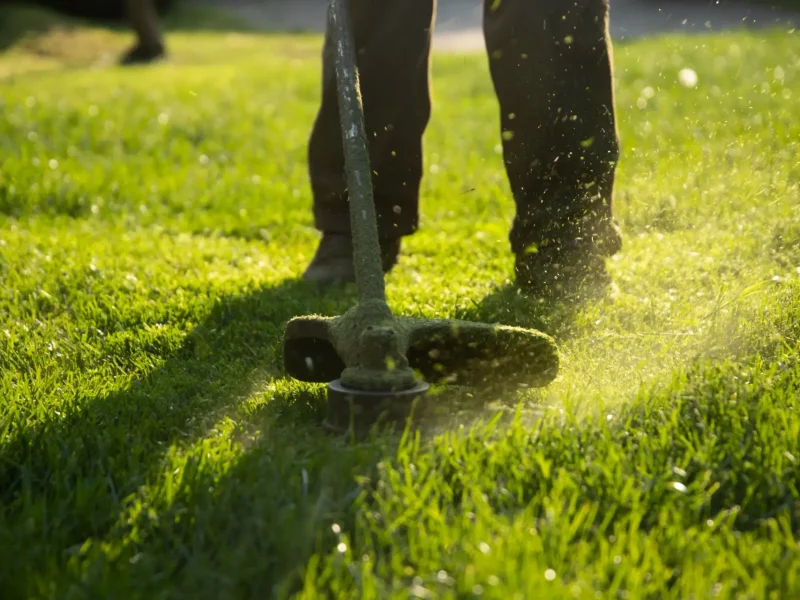
Knowing the right mowing height is just one piece of a healthy lawn. Consistent, professional mowing that respects your grass type, growth stage, and seasonal conditions makes a visible difference in how your yard looks and performs all year long.
At Perez Tree Services, we provide reliable lawn mowing services throughout Cleveland, TN tailored to the specific grass types and conditions of each property we serve. Whether you need weekly maintenance or seasonal lawn care support, our team is here to keep your lawn looking its best.
Ready for a lawn that gets the care it deserves? Contact Perez Tree Services today to schedule lawn mowing services in Cleveland, TN and the surrounding areas. Call us at (423) 310-3969 or email info@pereztreeservicestn.net.